If there is one part of motorcycle tire changing that makes riders question their life choices, it is usually breaking the bead. The tire is flat, the wheel is on the ground and somehow the bead still acts like it signed a long-term lease with the rim.
The good news is that bead breaking is more about method and leverage than raw strength. This guide explains what the bead is, why it gets stubborn and how to break it safely without doing something heroic and regrettable.
What the bead actually is
The bead is the reinforced edge of the tire that seals tightly against the rim. It is supposed to stay seated under pressure so a little resistance is normal. Dirt, age, heat cycles and long periods without movement can all make it more stubborn.
Before you try anything
First, remove the valve core and make sure the tire is completely deflated. A surprising amount of bead-breaking frustration comes from a tire that still has pressure trapped inside.
Second, place the wheel on a stable surface and think about rim protection before you start adding force.
Method 1: Dedicated bead breaker
This is the cleanest and most controlled option. A dedicated bead breaker applies force where it is needed while keeping the wheel stable. For most riders, this is the easiest way to break the bead consistently at home.
Use lubrication if needed, position the breaker close to the rim without pinching or damaging the tire and apply steady pressure instead of jerky force.
Method 2: Manual tire changer with built-in bead breaker
A quality changer with an integrated bead breaker often gives the best overall workflow because you are not switching between random tools and positions. The wheel stays controlled and the bead-breaking step becomes part of one organized process rather than a separate battle.
Method 3: Improvised methods
Improvised methods can work, but they also carry more risk. If you use clamps, body weight or other workarounds, go slowly and protect the wheel. This is where scratches, pinches and awkward body mechanics tend to show up.
Improvised does not automatically mean wrong. It just means technique matters even more.
How lubrication helps
Bead lube or tire mounting lube does not replace leverage, but it can help the bead move more smoothly once pressure is applied. If the tire is fighting you, a little lubricant is often a smarter answer than more force.
Common reasons the bead will not break
Not fully deflating the tire, working in a bad position, applying force too far from the rim and trying to rush the job are common issues. Older tires can also be significantly more stubborn than fresh ones.
Where Rabaconda makes a difference
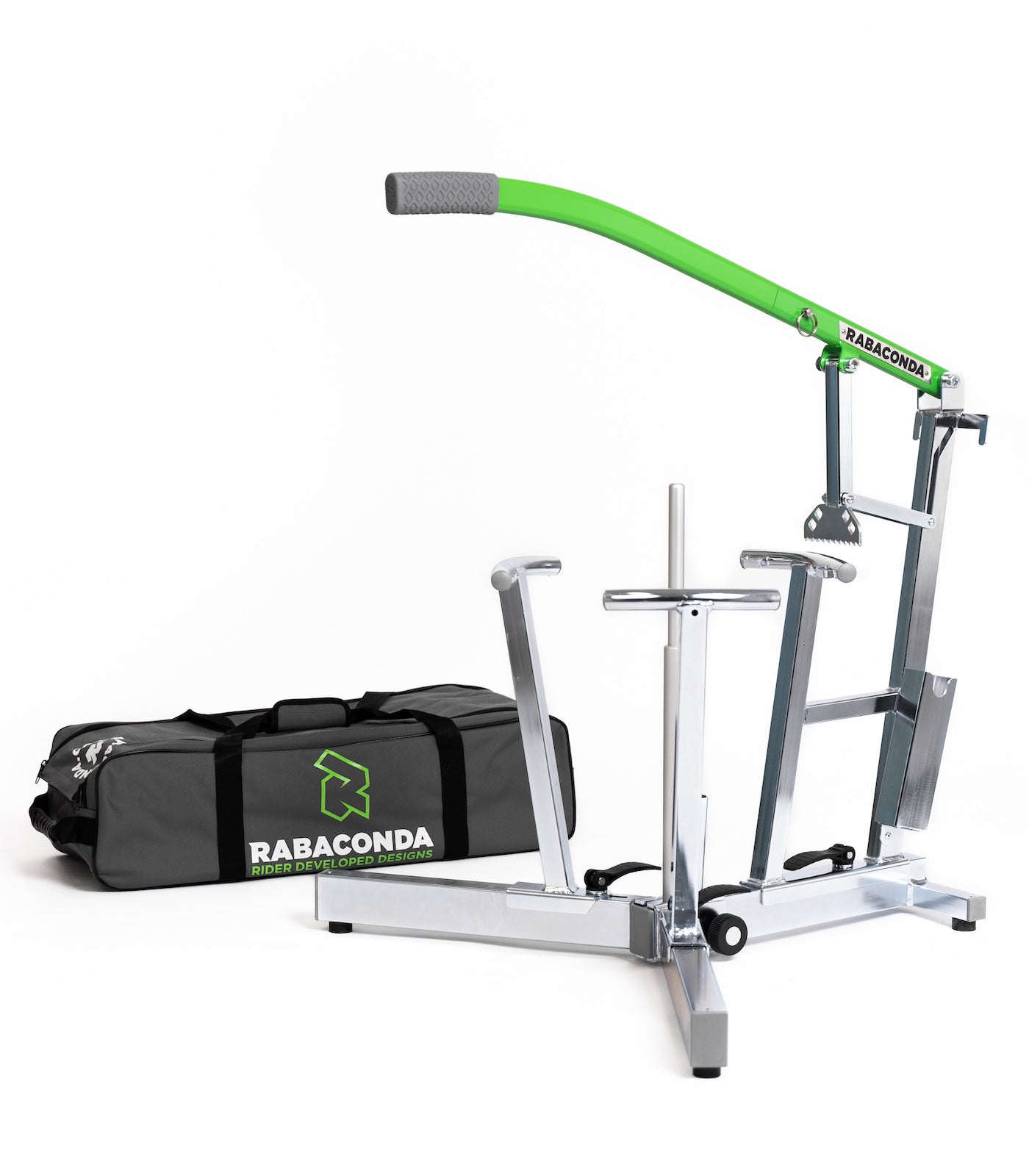
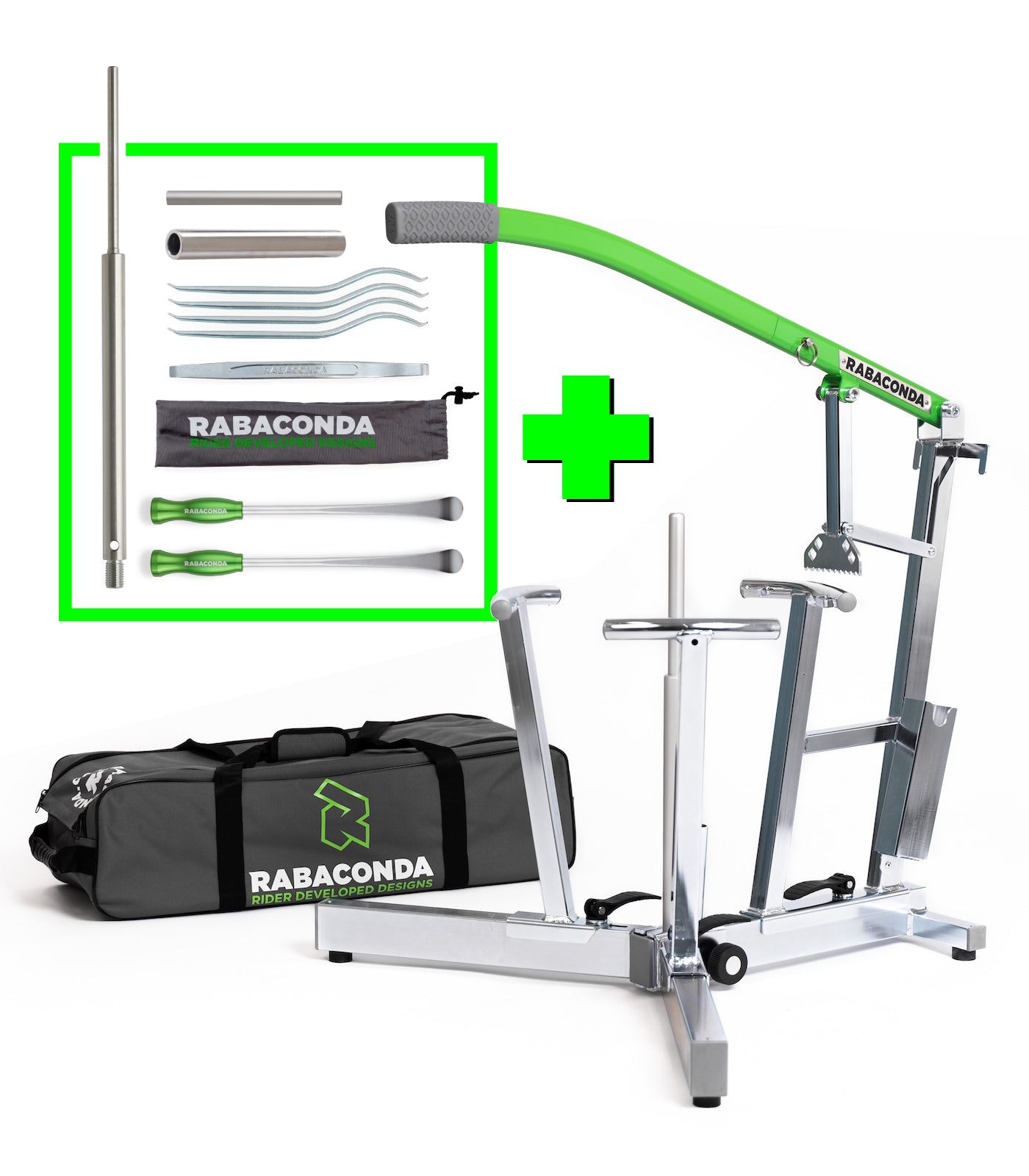
For riders who want a repeatable solution, a tire changer with a strong bead-breaking setup makes this step much easier.
The Rabaconda Street Bike Tire Changer uses a long lever and stable frame to help break even tough beads with more control.
For dirt riders, the Rabaconda Dirt Bike Tire Changer uses a bead breaker positioning system that keeps the process organized and effective.
That is really the value here: not magic, just smarter leverage and better workflow. Less flailing. More progress.
Bottom line
Breaking the bead is one of the most frustrating parts of a tire change only when the setup is working against you. Deflate fully, stabilize the wheel, use proper leverage and do not be afraid to use better tools if this is a job you do regularly.
Frequently asked questions
Why is the bead so hard to break on a motorcycle tire?
The bead is designed to seat tightly against the rim. Age, dirt, heat cycles and trapped air can make it even more stubborn.
Can I break the bead without a machine?
Yes. Many riders do it with manual tools or improvised methods, though a dedicated bead breaker is usually easier and more controlled.
Does tire lube help break the bead?
Lube can help the bead move more smoothly once pressure is applied, especially on stubborn tires.
What is the easiest way to break the bead at home?
A stable manual changer or dedicated bead breaker is usually the easiest and most repeatable home option.